How Nashville Weather Wears Down Exterior Paint, and How to Make a Paint Job Last
Ask anyone who has lived in Nashville for a few years and they'll tell you the weather doesn't do anything halfway. Summers are hot and sticky, spring brings long stretches of rain, and winter swings between mild afternoons and hard overnight freezes. Exterior paint feels every bit of that.
The good news is that many exterior paint failures aren't the paint's fault. They come from moisture getting behind the film, or from prep that was rushed. Both are things you can control.
What actually fails first
Paint rarely just wears away. Long before it thins out, it usually lets go in one of a few predictable places.
The bottom edges of siding and trim. Water runs down the face of the house and hangs on the lowest edge of every board. If those edges weren't sealed, the wood soaks it up and the paint lifts from behind.
Window sills and door thresholds. These are flat or nearly flat, so water sits on them. They take the most sun and the most rain, and they're usually the first spots to crack and peel.
North and shaded walls. In our humidity, walls that never get full sun stay damp longer. That's where you'll see mildew, and where paint over a dirty surface struggles to bond.
South and west walls. The opposite problem. Strong afternoon sun breaks down the binder in the paint, which shows up as chalky residue on your hand and color that looks washed out next to the rest of the house.
If one side of your house looks worse than the others, that's normal. It doesn't always mean the whole house needs paint, and a good estimator will tell you so.
Moisture is the real enemy
Around Nashville, a lot of exterior trouble starts with water that has nowhere to go. Before anyone talks about paint, it's worth walking the house and looking at:
- Gutters and downspouts. Overflowing gutters soak fascia and the siding below. A downspout that dumps against the foundation keeps the lowest courses wet.
- Caulk joints. Caulk around windows, doors and trim dries out and splits over time. Every open joint is a place for rain to get in behind the paint.
- Soft wood. Press a screwdriver into a sill or the bottom of a door casing. If it sinks in, that's rot, and paint won't fix it.
On our estimates, rot repair is quoted separately as carpentry, with photos, so you can see exactly what's being replaced and why. Nothing hidden gets added to the job later without a photo and your approval first.
Prep is most of the job
A lasting exterior paint job is mostly decided before the first can is opened. The steps that matter most here:
- Wash the house. Dirt, pollen and mildew keep new paint from bonding. Mildew has to be killed, not just rinsed, or it grows back through the new coat.
- Let it dry. In our humidity that can take longer than people expect, especially on shaded walls.
- Remove loose paint. Anything that's lifting will keep lifting under new paint, so it comes off before priming.
- Repair and prime bare wood. Bare spots get primer before any finish coat, including the bottom edges of boards where they can be reached.
- Caulk the joints. Fresh caulk at trim, windows and seams keeps rain out from behind the paint.
- Two finish coats. Our standard on siding and trim is two coats. A second coat builds the thickness that stands up to sun and rain.
Picking a paint for this climate
For siding and trim around Nashville, a high-quality 100% acrylic exterior paint is the usual choice. It stays flexible as the house expands in summer heat and contracts in winter, and it lets moisture vapor escape instead of trapping it.
On a Sylvan Park exterior we wrote about on our old blog, the products were matched to the surface: Sherwin-Williams Emerald on the siding, Emerald Water-Based Alkyd on the trim and details, and Sherwin-Williams SuperDeck Solid stain on the deck. The siding went to Cloudburst in satin, with Meander Blue accents and Really Teal on the gloss details.
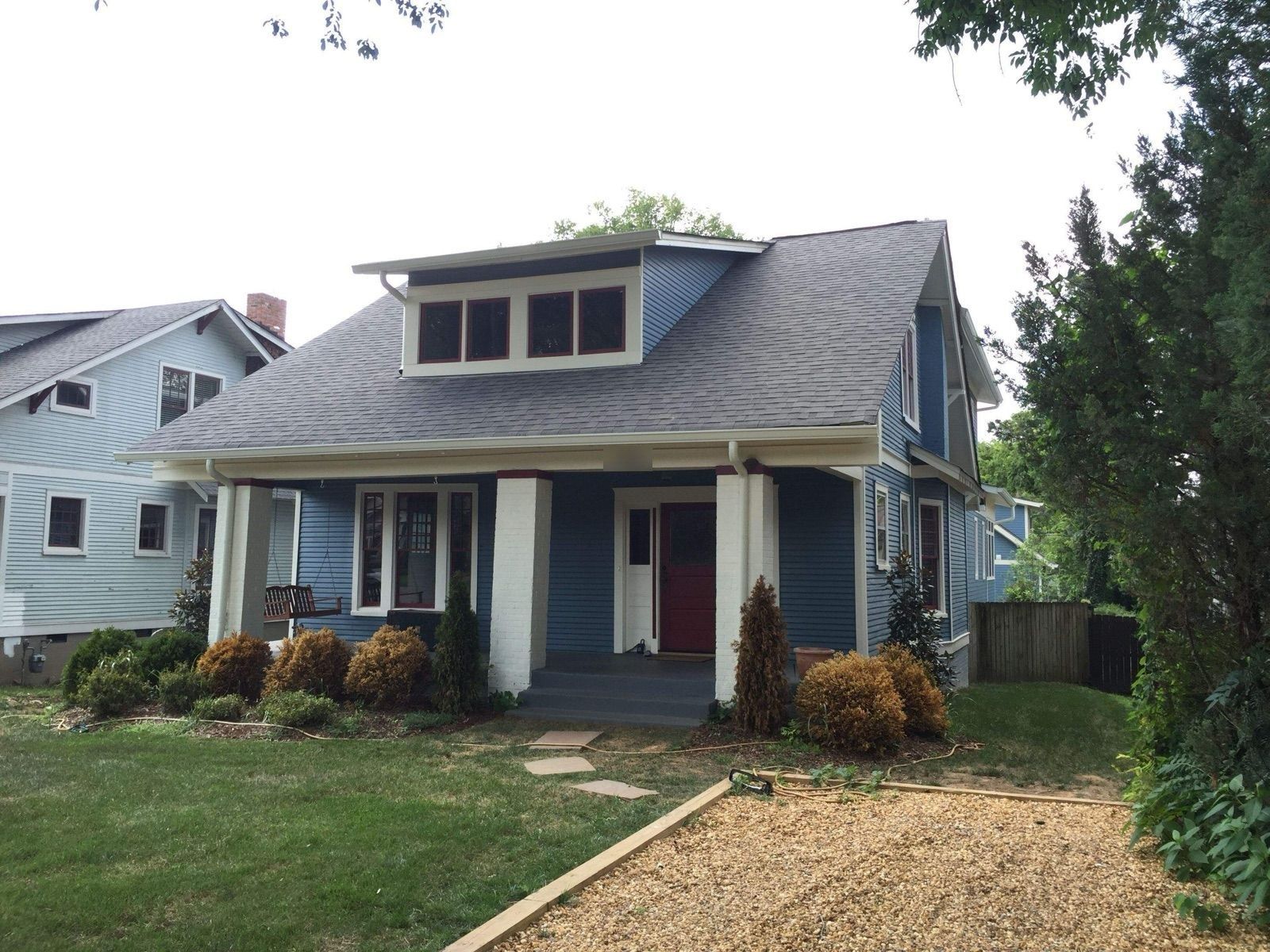
Exterior repaint in the Belmont-Hillsboro area of Nashville.
Sheen matters too. Flat or low-sheen finishes hide imperfections on siding, while satin or semi-gloss on trim and doors is easier to wipe down and sheds water better. Darker colors absorb more heat, so on a hot south wall they'll fade sooner than lighter ones. That's not a reason to avoid them, just something to know when you choose.
Signs it's time
You don't need to repaint on a schedule. Watch for:
- Chalky residue when you rub the siding
- Peeling or cracking on sills, trim and the bottoms of boards
- Open caulk joints
- Fading that makes one side of the house look different from the others
- Mildew that comes back soon after washing
Catching these early usually means a lighter job: more prep and touch-up, less repair.
How we approach exterior work here
Nash Painting has painted Middle Tennessee homes since 2009. Every exterior estimate is a written bid, there's no deposit, and nothing is final until you approve it. If you're seeing soft or rotting wood, send close-up photos in our chat, and we'll email you an estimate. If you'd like us to look at your house and tell you honestly what it needs, start with our exterior painting page or schedule an estimate.
- What time of year is best for exterior painting around Nashville?
- Can you paint the outside of a house right after it rains?
- Does the warranty cover exterior work?