
Paint or Replace? What a Lasting Cabinet Finish Takes
Kitchen cabinets get more daily handling than any other painted surface in a house. Doors open and close dozens of times a day, hands are often wet or greasy, and the area around the stove sees heat and steam. That's why painted cabinets either look great for years or start chipping within months. The difference is almost entirely in how they're prepared and finished.
Here's what a lasting cabinet finish takes.
Why paint instead of replace
If your cabinet boxes are solid and the layout works, painting is a way to change the whole feel of a kitchen without tearing it out. You keep your countertops, avoid weeks of demolition and get to choose any color you like. Many homeowners pair painted cabinets with new hardware for an even bigger change.
Painting isn't the answer for everything. If doors are warped, boxes are water-damaged under the sink or the layout no longer works, replacement may be the better investment. An honest estimate should tell you that.
The steps that make the difference
1. Take it apart. Doors and drawer fronts come off, hardware is removed and labeled, and everything is tracked so it goes back exactly where it came from. Painting doors flat gives a smoother finish than painting them on the hinges.
2. Degrease thoroughly. Kitchen cabinets carry cooking grease, hand oils and cleaning residue, much of it invisible. Paint won't bond to it. This step is easy to rush, and skipping it is one of the most common reasons painted cabinets chip.
3. Sand. Sanding dulls the old finish so primer can grip it. Stained cabinets with a slick factory finish need this most.
4. Fill and repair. Dents, gouges and open grain get filled where needed. If you want the wood grain to disappear on oak cabinets, grain filling is an extra step worth talking through before the job starts.
5. Prime. A bonding primer made for cabinets is the foundation of the whole finish. Our standard is one coat of primer, sanded smooth.
6. Two finish coats. We follow with two finish coats of a hard, durable cabinet enamel, lightly sanded between coats for smoothness.
7. Protect the kitchen. Countertops, floors and appliances are covered, and the work area is kept clean so dust doesn't end up in the finish.
Curing takes patience
Cabinet paint can feel dry to the touch within hours, but it keeps hardening for weeks. Full cure takes 2–4 weeks. During that time:
- Open and close doors gently.
- Don't scrub the surfaces; wipe spills with a soft, damp cloth.
After it cures, the finish is tough and easy to clean.
Choosing a cabinet color
A few things help narrow the choice:
- Look at what's staying. Your countertop, backsplash and floor are fixed. Bring samples into the kitchen and hold them against those surfaces.
- Check the light. North-facing kitchens look cooler and darker; west-facing kitchens warm up in the afternoon. A white that looks clean in one may look yellow or gray in another.
- Consider two tones. Darker lower cabinets with lighter uppers, or a contrasting island, can add depth without making the room feel heavy.
- Think about wear. Very dark and very bright white cabinets both show fingerprints and smudges more than mid-tones.
In a Mt. Juliet kitchen we wrote about on our old blog, the homeowners wanted a calm color drawn from nature. The cabinet boxes, doors and drawer fronts all went to Sherwin-Williams Mountain Stream (SW 7612) in satin.
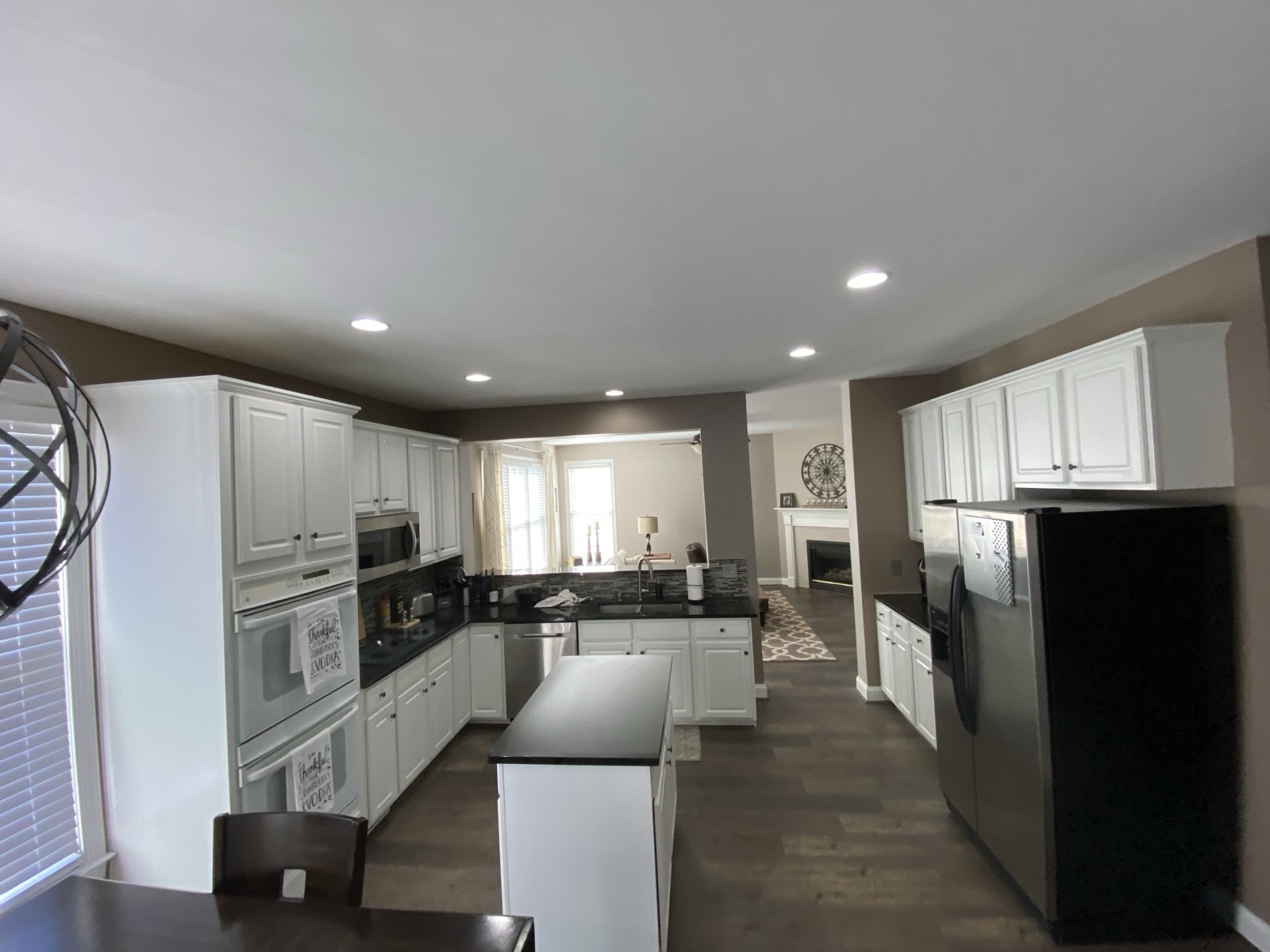
Cabinet painting in Holt Woods, Nashville.
Sheen
Most homeowners choose satin or semi-gloss for cabinets. Higher sheens are easier to clean but show more of the surface underneath, so the prep needs to be especially good.
How we work
Nash Painting has painted Middle Tennessee homes since 2009. There's no deposit, the written bid spells out exactly which cabinets, surfaces and steps are included, and painting work carries a warranty of up to 10 years, depending on the package. See our cabinet painting page, look at recent work in the area, or schedule an estimate.
- How long before we can use the kitchen normally?
- Can stained wood cabinets be painted?
- Should the inside of the cabinets be painted too?